Operating a furnace in the Mile High City requires specialized high-altitude derating to account for roughly 17% less air density than at sea level. Without proper orifice adjustments and manifold calibration, standard…
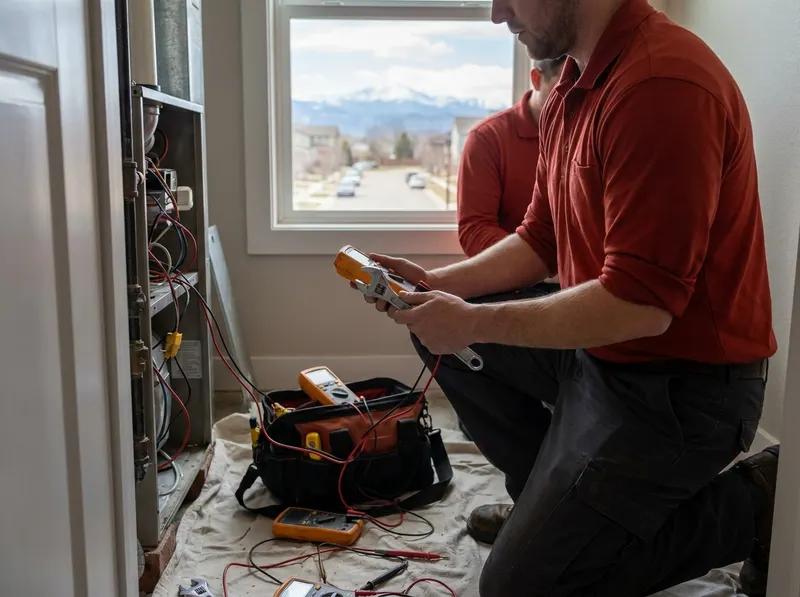
Operating a furnace in the Mile High City requires specialized high-altitude derating to account for roughly 17% less air density than at sea level. Without proper orifice adjustments and manifold calibration, standard heating units produce excess carbon monoxide, build up soot on burner assemblies, and short-cycle due to fluctuating limit switches. Choosing high-altitude diagnostics over generic furnace troubleshooting ensures that airflow and fuel ratios are measured using calibrated digital manometers, resolving the root operational cause rather than masking symptoms with unnecessary part replacements.
Historic brick homes in Capitol Hill, Baker, and Washington Park often struggle with unlined masonry chimneys that weaken flue drafting during sub-zero cold snaps. Conversely, multi-story residences in Central Park, Five Points, and Sloan's Lake frequently feature long horizontal PVC venting that increases static pressure resistance against standard draft inducers. Diagnostic testing tailored to these architectural realities stabilizes flame quality and draft pressure, delivering reliable heat recovery when Front Range blizzards push temperatures down along the I-25 corridor.
Every job gets a firm, written price after a free on-site visit.
Tell us about your high-altitude furnace repair & diagnostics job in Denver and we'll send a clear, written quote — usually the same day.
 breez system HVAC