Sudden Front Range temperature drops can cause heating systems to lock out overnight, leaving Denver households without vital indoor climate protection. High elevation adds distinct atmospheric strain on combustion…
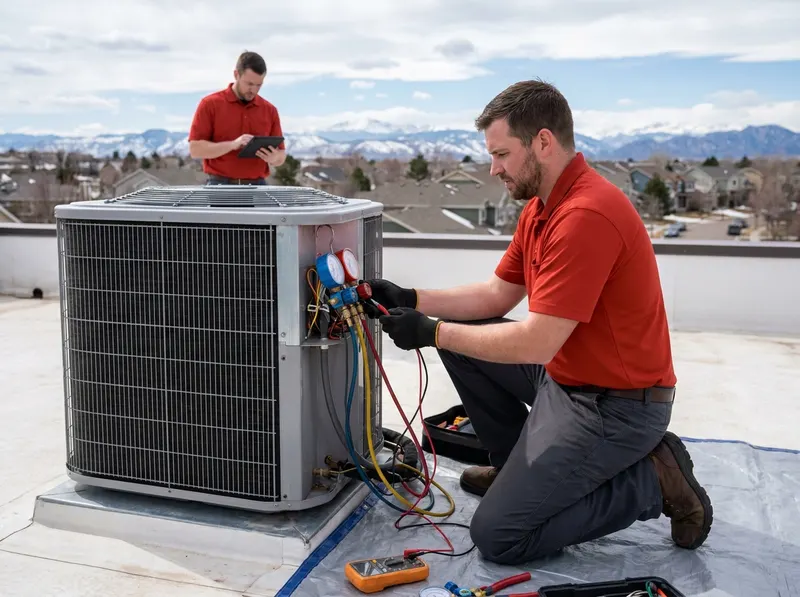
Sudden Front Range temperature drops can cause heating systems to lock out overnight, leaving Denver households without vital indoor climate protection. High elevation adds distinct atmospheric strain on combustion assemblies and blower motors in older brick bungalows around Washington Park and Capitol Hill, as thinner air requires precise fuel-to-air calibration. An emergency diagnostic appointment isolates malfunctioning draft inducers, cracked heat exchangers, failed capacitors, and stuck reversing valves before minor electrical issues lead to total mechanical burnout.
During intense July heat spikes along the I-25 corridor, cooling equipment faces continuous duty cycles that expose failing run capacitors and blocked condensate lines. Properties in neighborhoods like Central Park and Sloan's Lake frequently experience frozen evaporator coils or compressor overloads under high-altitude sun loads. Scheduling targeted emergency diagnostics pinpoints whether an outage stems from a simple sensor calibration failure or a deeper refrigerant leak, preventing unnecessary full-system replacements.
Choosing emergency diagnostics rather than waiting for standard business hours protects plumbing lines from freezing during sub-zero cold snaps and preserves indoor air safety. Technicians verify carbon monoxide levels, inspect safety limit switches, and test electrical continuity under live operational loads. Every diagnostic visit delivers a straightforward breakdown of component health, allowing homeowners near Cherry Creek and Five Points to make informed repair decisions without sales pressure.
Every job gets a firm, written price after a free on-site visit.
Tell us about your emergency heating & cooling diagnostics job in Denver and we'll send a clear, written quote — usually the same day.
 breez system HVAC