Denver's semi-arid high-altitude climate provides ideal conditions for evaporative cooling efficiency in neighborhoods like Washington Park, Baker, and Park Hill. However, dry air accelerates mineral buildup on cooling…
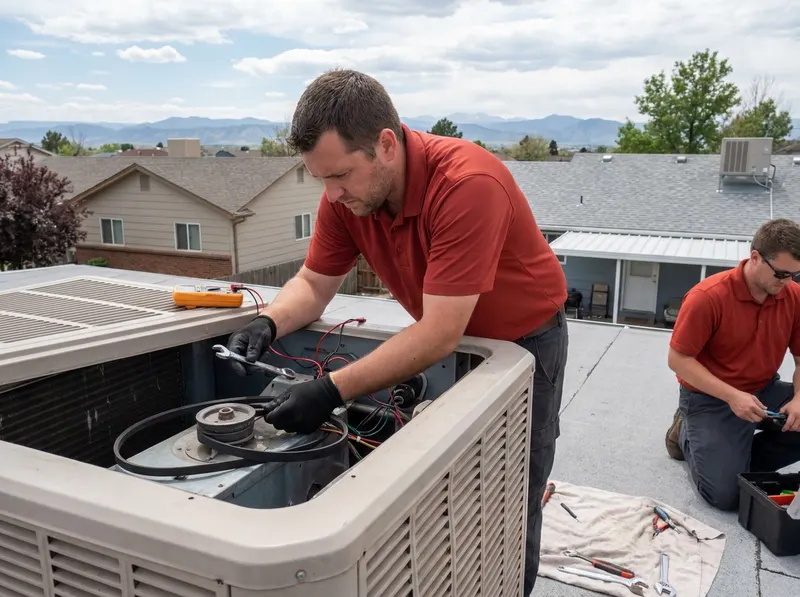
Denver's semi-arid high-altitude climate provides ideal conditions for evaporative cooling efficiency in neighborhoods like Washington Park, Baker, and Park Hill. However, dry air accelerates mineral buildup on cooling media when hard municipal water evaporates. Mineral scaling chokes off air volume, strains the blower motor, and causes water pumps to seize. Prompt mechanical repairs—such as swapping worn drive belts, resetting stuck brass float valves, and replacing calcium-crusted Celdek or Aspen pads—restore peak airflow before peak July temperatures stress living spaces.
Seasonal timing across the Front Range requires proactive swamp cooler conversion. Fall shutdowns must occur before October freezes penetrate exterior copper lines running through attics or across rooftops in Congress Park and Five Points. Winterization includes draining reservoir pans, blowing residual moisture from water lines, isolating supply shutoff valves, and strapping down weather-tight canvas covers to block winter drafts. Spring turn-ons reverse this workflow by flushing accumulated dirt from the basin, lubricating motor bearings, setting clean water levels, and ensuring uniform saturation across every pad.
Choosing evaporative cooler maintenance over standard air conditioning provides continuous whole-home ventilation at a fraction of the seasonal electrical cost. When components malfunction near Sloan's Lake or Central Park, targeted pump, motor, and line repairs solve temperature issues without requiring costly equipment overhauls.
Every job gets a firm, written price after a free on-site visit.
Tell us about your evaporative cooler repair & seasonal conversion job in Denver and we'll send a clear, written quote — usually the same day.
 breez system HVAC