Transitioning away from atmospheric gas furnaces toward cold-climate heat pumps provides continuous dual-season comfort through a single mechanical system. At Denver's 5,280-foot elevation, thinner air reduces standard…
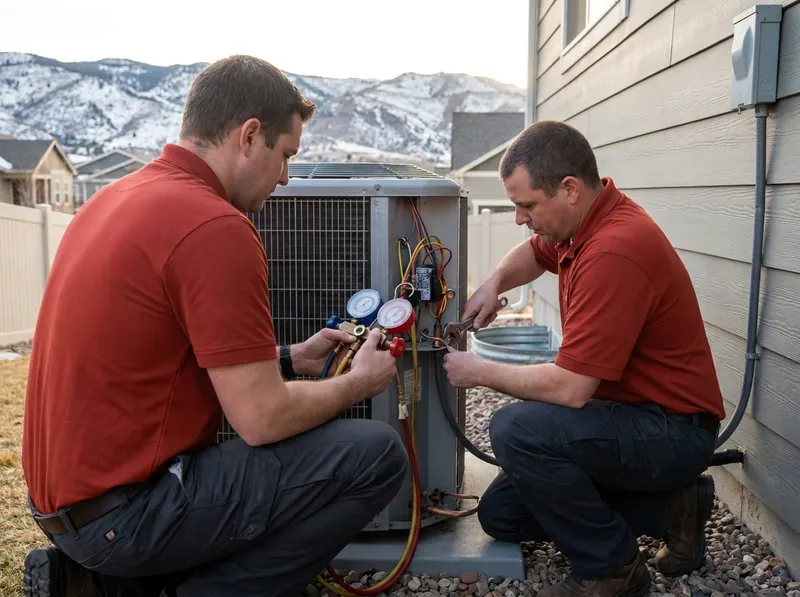
Transitioning away from atmospheric gas furnaces toward cold-climate heat pumps provides continuous dual-season comfort through a single mechanical system. At Denver's 5,280-foot elevation, thinner air reduces standard heat transfer efficiency, requiring hyper-heating inverter compressors that maintain full British Thermal Unit output even as temperatures drop across Denver County during sudden winter Arctic fronts. Choosing this conversion eliminates reliance on fluctuating natural gas supplies while delivering precise variable-speed cooling through high-temperature July heat spikes.
In historic neighborhoods such as Washington Park, Baker, and Congress Park, older brick homes often lack the ductwork volume required for bulky traditional forced-air retrofits. Cold-climate multi-zone heat pump systems utilize compact refrigerant lines to heat and cool individual rooms efficiently without altering structural framing. For modern homes in Central Park, Five Points, and Highland, central ducted cold-climate units integrate directly into existing duct networks, balancing airflow near open spaces like City Park and Sloan's Lake.
Technicians size equipment strictly using Manual J load calculations tailored to regional design temperatures, avoiding oversizing errors that cause short-cycling. Transparent upfront assessments verify electrical panel capacity and local Xcel Energy or city rebate eligibility before installation begins, providing immediate relief from unpredictable winter utility bills.
Every job gets a firm, written price after a free on-site visit.
Tell us about your cold-climate heat pump conversion job in Denver and we'll send a clear, written quote — usually the same day.
 breez system HVAC